The Eight Planets, From Smallest to Largest
Mercury is only a little wider than the continental United States. Jupiter could line up 11 Earths across its middle. Here is the full lineup, using NASA's own measurements, plus a few surprises along the way.
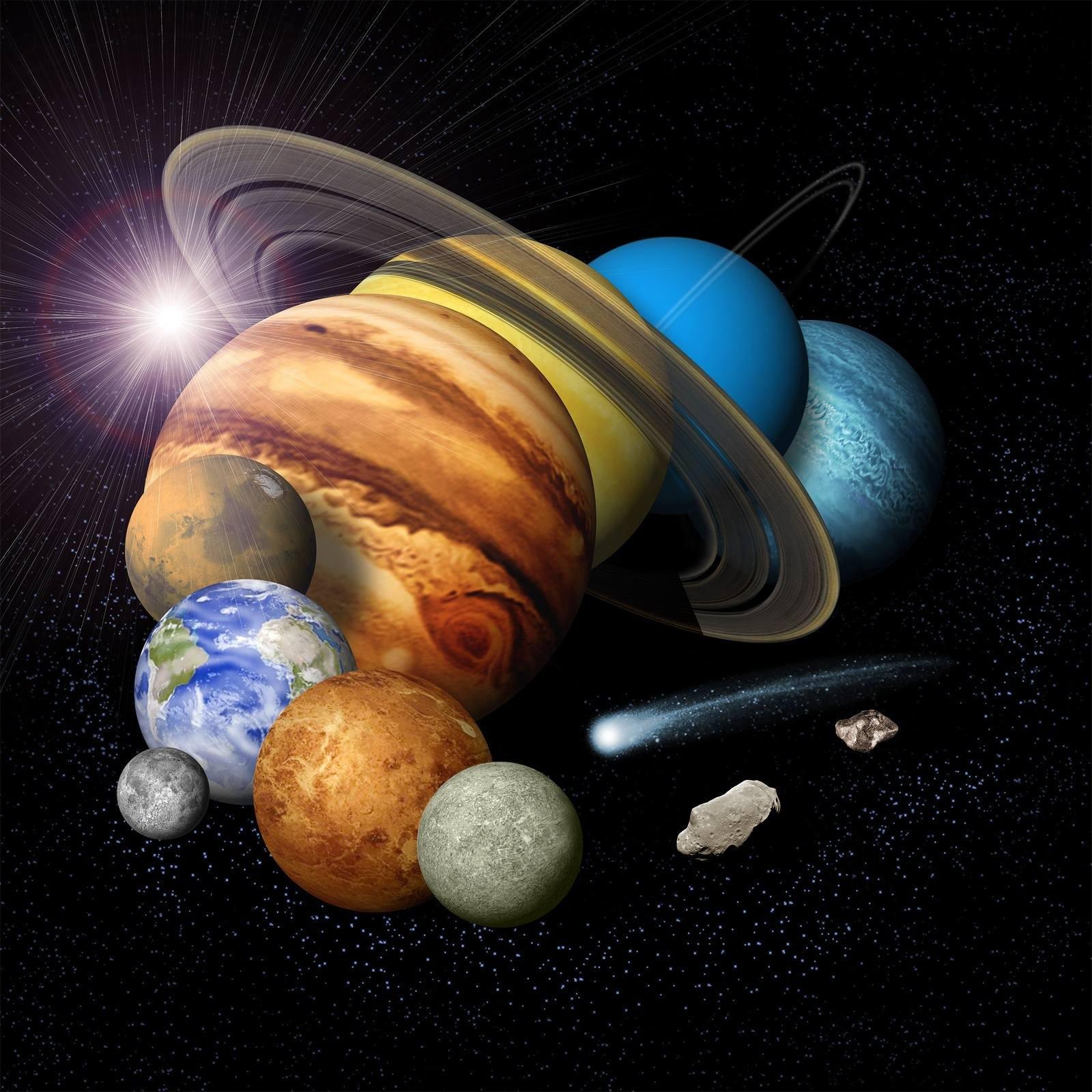
Pictures of the solar system rarely show the planets at their true sizes, because the gap between the smallest and the largest is enormous. Here they are in order, using the equatorial diameters listed on NASA's planetary fact sheet.
The lineup
- Mercury: 3,032 miles (4,879 km). The smallest planet is only about 38 percent as wide as Earth, and smaller than Jupiter's moon Ganymede.
- Mars: 4,220 miles (6,792 km). About half Earth's width, but with the tallest volcano in the solar system.
- Venus: 7,521 miles (12,104 km). Nearly Earth's twin in size at 95 percent of our diameter, though its surface is hot enough to melt lead.
- Earth: 7,926 miles (12,756 km). The largest of the four rocky planets.
- Neptune: 30,775 miles (49,528 km). Almost four Earths wide.
- Uranus: 31,763 miles (51,118 km). Just a little wider than Neptune.
- Saturn: 74,898 miles (120,536 km). About 9.4 Earths across, not counting its rings.
- Jupiter: 88,846 miles (142,984 km). About 11.2 Earths would fit side by side across its equator.
Two big jumps
The list splits neatly into two families. The four rocky inner planets are all smaller than Earth. Then the size leaps: the smallest giant, Neptune, is almost four times as wide as the largest rocky planet. From Uranus to Saturn the diameter more than doubles again.
Bigger is not always heavier
Size and mass don't always line up. Neptune is smaller than Uranus but heavier, about 17 Earth masses compared with Uranus's 14.5, because Neptune is denser.
And then there is Jupiter. According to NASA's numbers, it holds about 318 times the mass of Earth, which is about 2.5 times the mass of all the other planets combined. Saturn is nearly as wide, but it is so light for its size that it has the lowest density of any planet, lower than water.
A note on the picture
The montage above, made by NASA's Jet Propulsion Laboratory, groups the planets for a family portrait, so the sizes and spacing are not to scale. For a true side-by-side comparison, watch our Reel below, where each world is drawn at its real relative size.
Enjoyed this story?
Get new space stories and 3D space-fact Reels in your Facebook feed every day.