How Long Would It Take to Reach the Nearest Star?
Light reaches the Moon in just over a second. The fastest spacecraft ever built would still need about 6,600 years to reach Proxima Centauri, and walking there would take nearly a billion years.
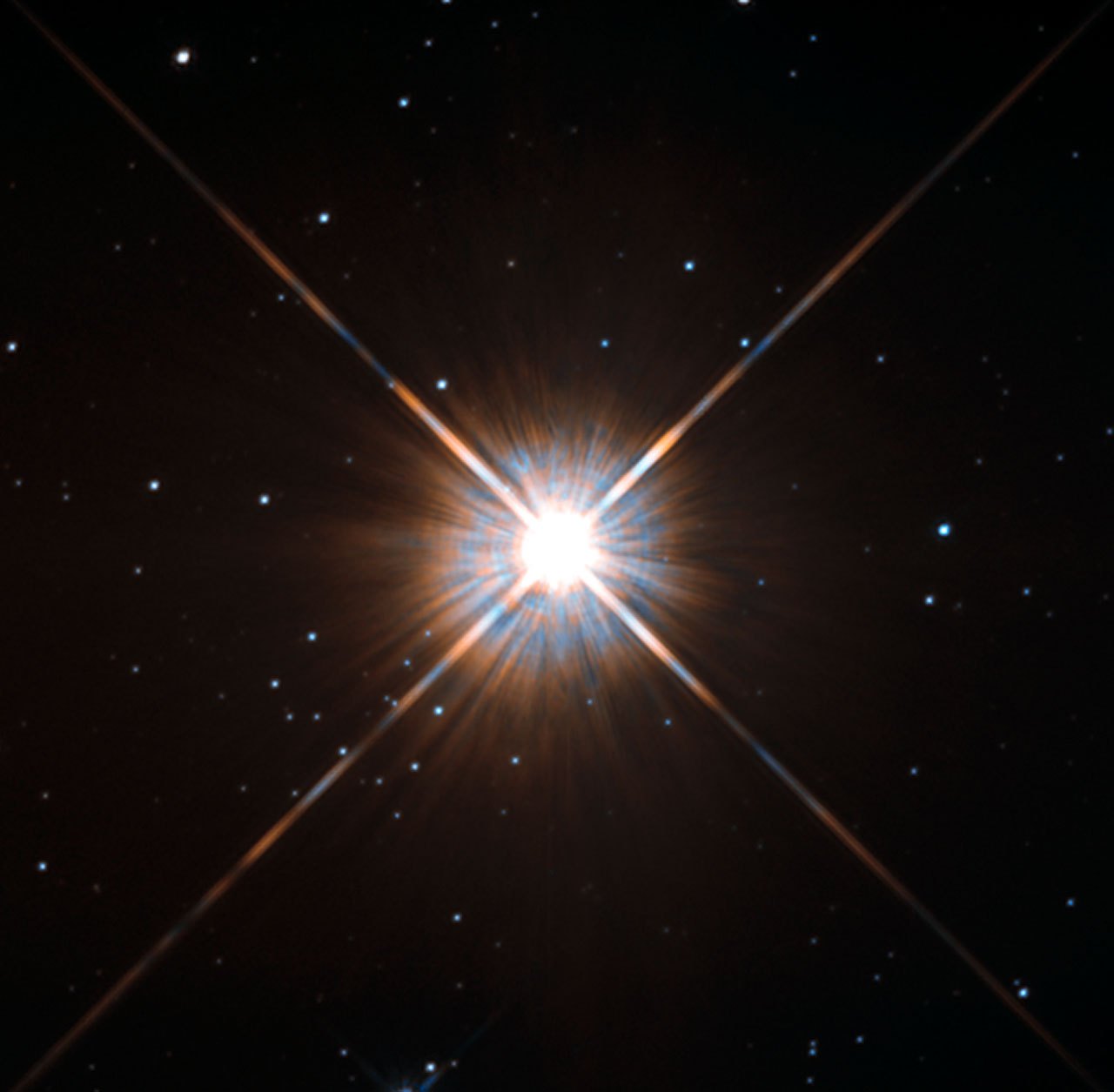
The closest star to the Sun is a small red dwarf called Proxima Centauri. In cosmic terms it is next door. In human terms the distance is almost impossible to picture. NASA puts it at about 40.2 trillion km, or roughly 25 trillion miles. That is about 4.25 light-years: even light, the fastest thing there is, needs more than four years to get there.
To get a feel for that distance, it helps to start much closer to home.
Warming up: the Moon and the Sun
- Light reaches the Moon in about 1.3 seconds and the Sun in about 8 minutes 20 seconds.
- Walking nonstop at 3 mph (5 km/h), with no sleep and no breaks, you would reach the Moon's distance in about 8.8 years.
Now the nearest star
- On foot: at that same walking pace, Proxima Centauri is nearly a billion years away.
- Voyager 1: NASA's most distant spacecraft is leaving the solar system at about 38,700 mph (17.3 km/s). NASA calculates that at this speed, a trip to Proxima would take more than 73,000 years. (Voyager is not actually heading that way.)
- Parker Solar Probe: the fastest object humans have ever built reached about 430,000 mph (692,000 km/h) on December 24, 2024, while diving past the Sun. Even if it could hold that speed in a straight line, it would need about 6,600 years to reach Proxima.
Why the stars are so far apart
Our galaxy holds hundreds of billions of stars, and yet the spaces between them dwarf the stars themselves. If the Sun were shrunk to a grain of sand about a millimeter wide, Proxima would be another grain roughly 18 miles (29 km) away, with almost nothing in between.
That emptiness is why every star you see at night is a distant sun, and why sending anything to even the nearest one remains far beyond today's technology. For now, telescopes like Hubble are how we visit. In the Hubble image above, the long spikes around Proxima are not part of the star; they are created by the telescope's own optics.
Enjoyed this story?
Get new space stories and 3D space-fact Reels in your Facebook feed every day.