Mars Still Gets Hit by Space Rocks, and One Strike Dug Up Buried Ice
On Christmas Eve 2021 a meteoroid blasted a 492-foot crater into Mars, shaking the ground hard enough for NASA's InSight lander to feel it more than 2,000 miles away. The impact threw out chunks of ice closer to the equator than ever seen before.
Mars has a thin atmosphere, only about 1 percent as dense as Earth's. That is not enough to burn up many incoming space rocks, so meteoroids that would vanish as shooting stars over Earth can reach the Martian ground intact. New craters still form there today, and one of them turned out to be a scientific jackpot.
A marsquake on Christmas Eve
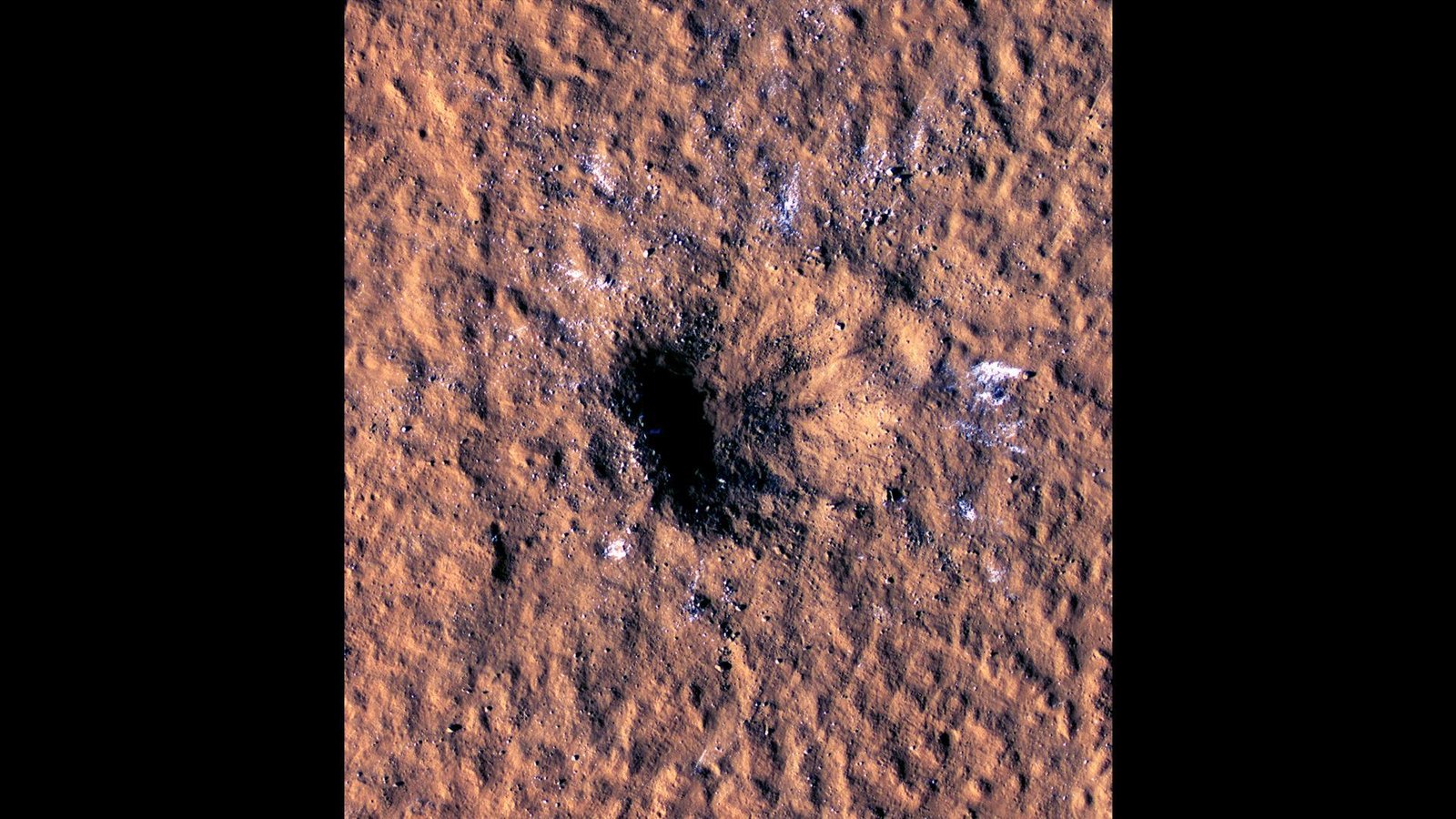
On December 24, 2021, NASA's InSight lander recorded a magnitude 4 marsquake. At first it looked like any other quake. Months later, scientists working with images from NASA's Mars Reconnaissance Orbiter found the real cause: a fresh impact crater in a region called Amazonis Planitia, more than 2,000 miles (about 3,500 km) from the lander.
According to NASA, the meteoroid was an estimated 16 to 39 feet (5 to 12 meters) across. It blasted out a crater about 492 feet (150 meters) wide and 70 feet (21 meters) deep, and threw debris as far as 23 miles (37 km) away. NASA called it one of the biggest meteoroid strikes seen on Mars since it began exploring the cosmos. According to the German Aerospace Center (DLR), it was also the first time an impact on another world was recorded both by a seismometer on the ground and by cameras in orbit.
Ice where nobody expected it
The real surprise was around the rim. The HiRISE camera picked out bright, boulder-size blocks of water ice, dug up from just below the surface. It was the closest to the Martian equator that buried ice had ever been found.
That matters for future crews. The equator is warmer and easier to land on than the poles, and accessible ice could one day supply drinking water, help grow food or be turned into rocket fuel.
Still being reshaped
The Christmas Eve crater was not a one-off. Scientists linked another large strike, from September 2021, to an earlier InSight quake, and orbiting cameras keep turning up fresh scars across the planet. Mars may look frozen in time, but its surface is still changing.
Enjoyed this story?
Get new space stories and 3D space-fact Reels in your Facebook feed every day.