Every Planet Is Tracing a Spiral Through the Milky Way
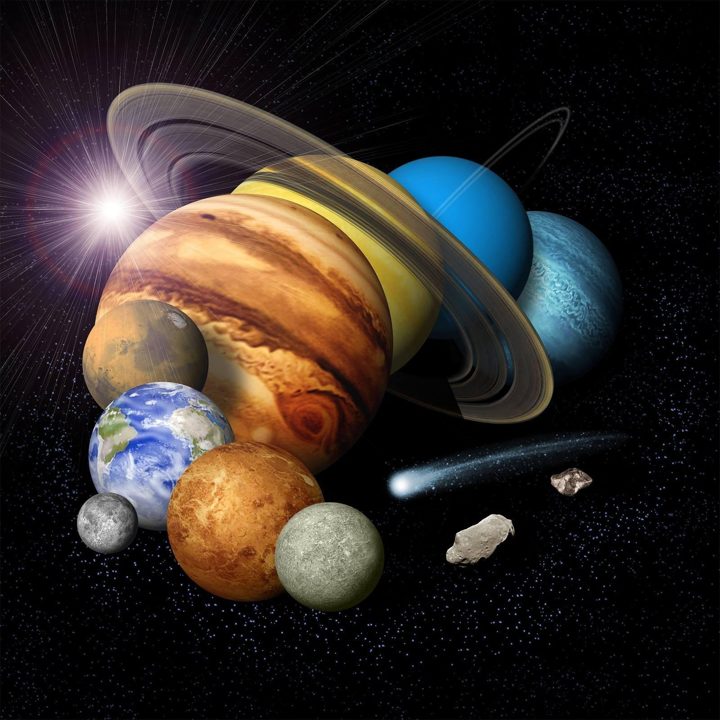
The Sun hauls all eight planets around the galaxy at about 515,000 mph, so no planet ever traces a closed circle. Each one draws a long, stretched-out helix, and the whole system is tilted as it goes.
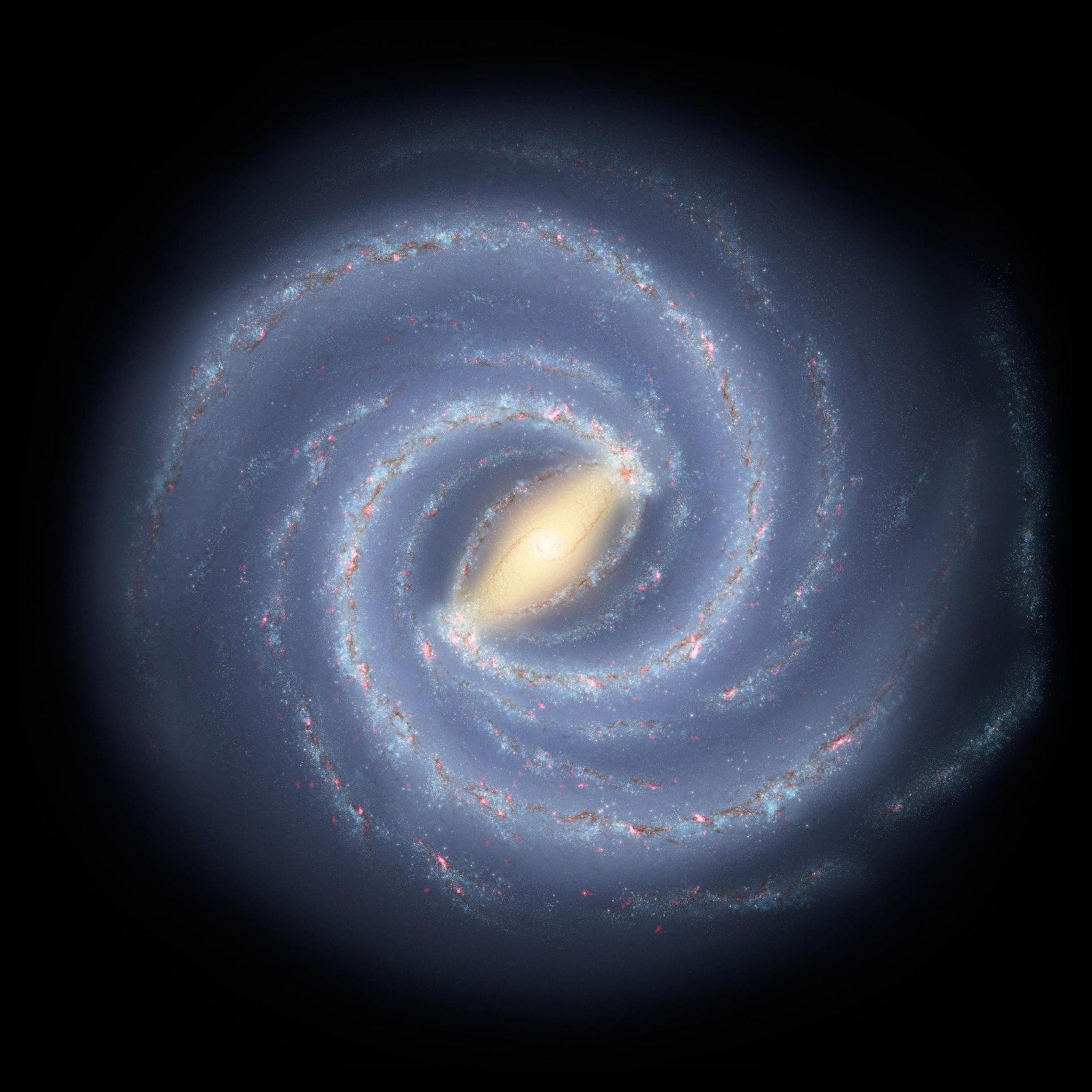
Look at any diagram of the solar system and you will see neat circles around a Sun that stays put. It is a useful picture, but it leaves out the biggest motion of all. The Sun is not standing still. According to NASA, our solar system orbits the center of the Milky Way at about 515,000 mph (828,000 km/h), and it takes the planets along for the ride.
Circles become corkscrews
Put the two motions together and the circles disappear. While Earth loops around the Sun once a year, the Sun itself moves forward along its path through the galaxy. A point that goes around in a circle while the center of that circle keeps moving draws a helix, the same shape as a stretched spring. Every planet does this, each on its own scale: Mercury in tight, fast coils, Neptune in slow, wide ones.
A very stretched spring
The surprising part is how stretched that spring really is. In one year the Sun covers roughly 4.5 billion miles (7.3 billion km) through the galaxy. Earth's orbit, meanwhile, is only about 186 million miles (300 million km) across. So each "coil" Earth draws is about 24 times longer than it is wide. If you could see it, Earth's path would look less like a slinky and more like a gently wavy line racing forward.
Tilted, not flat
There is another twist. The flat plane the planets orbit in is not lined up with the disk of the Milky Way. Astronomers at the National Radio Astronomy Observatory put the tilt at roughly 60 degrees (they quote about 63). So as the Sun moves, the planets are circling in a plane that sits at a steep angle to the direction of travel, not lying flat along it.
What the popular "vortex" videos get wrong
You may have seen animations showing the Sun as a comet-like leader with the planets streaming behind it like a tail. That is not how it works. The planets are not dragged behind the Sun. They stay bound to it and keep circling it, sometimes ahead of it, sometimes behind, sometimes off to the side. The helix is real; the trailing tail is not.
Around 20 laps so far
Even at more than half a million miles an hour, one trip around the galaxy takes about 230 million years, NASA says. With the solar system about 4.6 billion years old, that means the Sun and its planets have completed only about 20 laps since they formed.
We feel none of this because the motion is smooth and steady, and everything around us, the air, the oceans and the ground, is moving with us.
Enjoyed this story?
Get new space stories and 3D space-fact Reels in your Facebook feed every day.