The Moon Is Still Being Hit, and the Artemis II Crew Saw It Happen
With no air to burn them up, space rocks hit the Moon all the time. NASA has watched the flashes from Earth, found the fresh craters from orbit, and in April 2026 the Artemis II astronauts spotted five impact flashes with their own eyes.
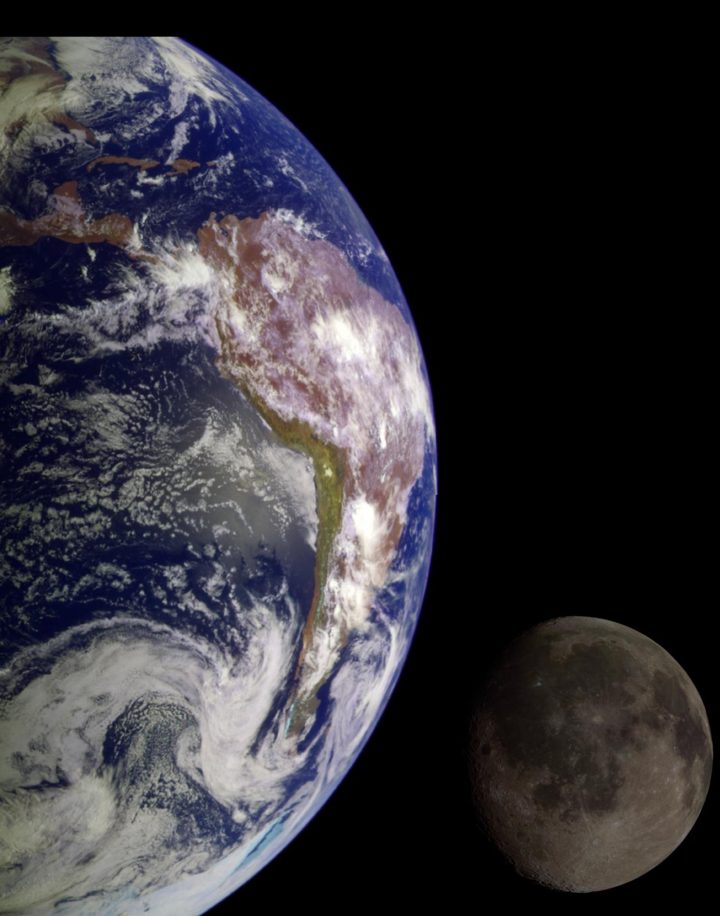
Earth's atmosphere protects us from most of the small rocks drifting through space. They burn up as meteors long before reaching the ground. The Moon has no such shield. Even pebble-size fragments slam straight into the surface, and each strike releases a short burst of light.
Astronauts saw the flashes
On April 6, 2026, during the Artemis II flyby, NASA's lunar scientists asked the crew to watch the Moon's dark side for those flashes. Orion was passing behind the Moon, which blocked the Sun for about 54 minutes, giving the astronauts an unusually dark view.
They saw five extremely faint "pinprick" flashes from about 46,000 miles (74,000 km) away, according to NASA's preliminary science report. The team ruled out cosmic rays and reflections from the spacecraft before confirming them. From their brightness, scientists estimate that each incoming rock was no more than a couple of inches wide, but moving at thousands of miles per hour.
Apollo astronauts reported similar flashes from lunar orbit, but NASA says the Artemis crew likely caught the faintest ever seen with the unaided eye. Because the flashes last only a fraction of a second, the crew marked them by hand on a tablet instead of photographing them.
The biggest flash on record
From the ground, NASA's Marshall Space Flight Center has watched the night side of the Moon with telescopes since 2006 and recorded hundreds of impact flashes. The brightest came on March 17, 2013, in a dark plain called Mare Imbrium. NASA said the flash was nearly 10 times as bright as anything recorded before.
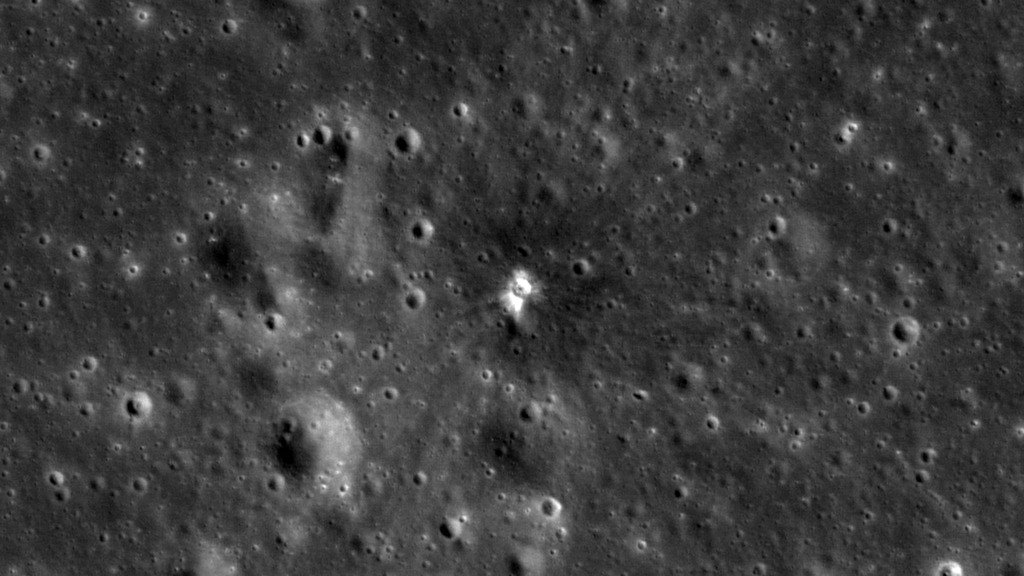
The object behind it was roughly a foot (30 to 40 cm) wide and weighed just under 100 pounds (about 40 kg), hitting at around 56,000 mph (25 km/s). A few months later, NASA's Lunar Reconnaissance Orbiter compared before and after images of the area and found the result: a brand-new crater about 62 feet (18.8 meters) wide, shown above, with more than 200 related surface changes scattered up to 19 miles (30 km) away.
Why it matters
Counting how often these small impacts happen is not just curiosity. Future lunar bases, rovers and habitats will sit on a surface that is exposed to this steady rain of debris. Every flash recorded, from Earth, from orbit or by astronauts at a window, helps engineers plan for it.
Enjoyed this story?
Get new space stories and 3D space-fact Reels in your Facebook feed every day.