Andromeda Is Rushing Toward Us at 250,000 mph, but a Crash Is Only 50-50
The Andromeda galaxy is approaching at about 250,000 mph (400,000 km/h), yet a 2025 Hubble and Gaia study gives only about a 50-50 chance of a merger within 10 billion years.
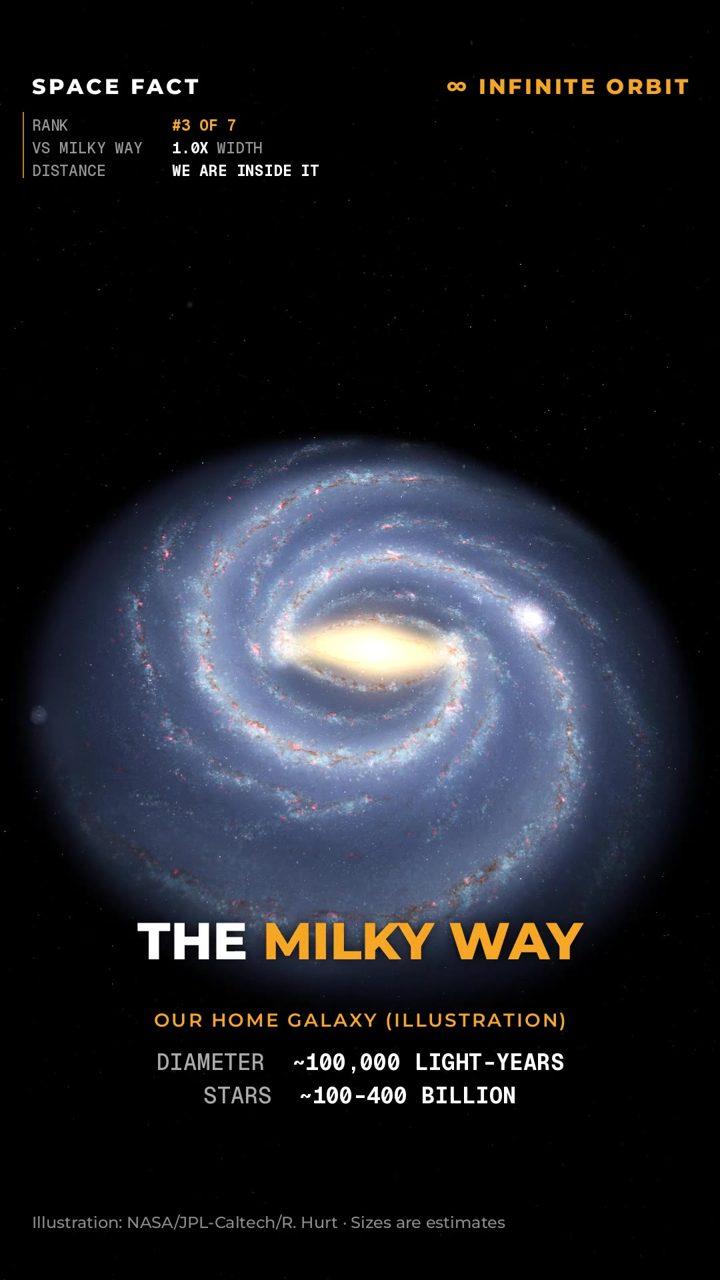
Our nearest big galactic neighbor is coming closer. NASA says the Andromeda galaxy (M31) is moving toward the Milky Way at about 250,000 mph (400,000 km/h). That is fast enough to cross the distance from Earth to the Moon in about an hour.
Still very far away
Even at that speed, nothing is going to happen anytime soon. Andromeda is about 2.5 million light-years away, so the light you see from it tonight left the galaxy about 2.5 million years ago.
Will they actually collide?
For more than a decade, the textbook answer was yes. In 2012, NASA announced that Hubble measurements of Andromeda's sideways motion pointed to a head-on collision in about 4 billion years.
In 2025, a team led by Till Sawala of the University of Helsinki took another look, using Hubble and ESA's Gaia data and running 100,000 computer simulations of how our neighborhood could evolve over the next 10 billion years. They also included the gravity of two smaller galaxies, Triangulum (M33) and the Large Magellanic Cloud. The result: only about a 50-50 chance that the Milky Way and Andromeda merge within the next 10 billion years. A direct collision in the next 4 to 5 billion years came out at only about 2%. If the two galaxies do merge, the most likely time is 7 to 8 billion years from now.
Even if they do merge, stars are so far apart that they would almost never hit each other. And the Sun has bigger plans of its own: NASA notes it will make Earth too hot for life in roughly 1 billion years.
Sources: NASA: Hubble Casts Doubt on Certainty of Galactic Collision, NASA: Hubble Shows Milky Way Is Destined for Head-On Collision (2012), Sawala et al., Nature Astronomy (2025), ESA: Hubble and Gaia revisit fate of our galaxy.
The video above is an illustrative 3D visualization and is not to scale.
Enjoyed this story?
Get new space stories and 3D space-fact Reels in your Facebook feed every day.