Voyager 1 Is About to Become the First Spacecraft One Light-Day From Earth
On Nov. 18, 2026, Voyager 1 will be about 16.1 billion miles (25.9 billion km) from Earth, so far that a radio signal needs a full day to reach it.
NASA's Voyager 1 is about to reach a milestone no human-made object has ever reached. On Wednesday, Nov. 18, 2026, at 5:16:07 a.m. EST (11:16 a.m. in Central Europe), the spacecraft will be one light-day from Earth.
How far is a light-day?
A light-day is a distance, not a time: it is how far light travels in 24 hours. NASA puts it at 16,094,799,096 miles (25,902,068,356 kilometers), roughly 16.1 billion miles (25.9 billion kilometers). From that point, a radio command sent from Earth will need a full day to reach Voyager 1, and its reply will need another day to come back.
Almost 50 years on the road
Voyager 1 launched on Sept. 5, 1977, flew past Jupiter and Saturn, and in August 2012 became the first spacecraft to cross into interstellar space, outside the Sun's protective bubble called the heliosphere. It is still cruising at nearly 38,000 mph (61,000 km/h). By the time it hits the light-day mark, it will have taken 49 years, two months and 11 days to get there.
Its twin, Voyager 2, is on pace to reach one light-day from Earth in November 2035.
Sources: NASA: Voyager 1, What Is a Light-Day, NASA: Where Are Voyager 1 and 2 Now?.
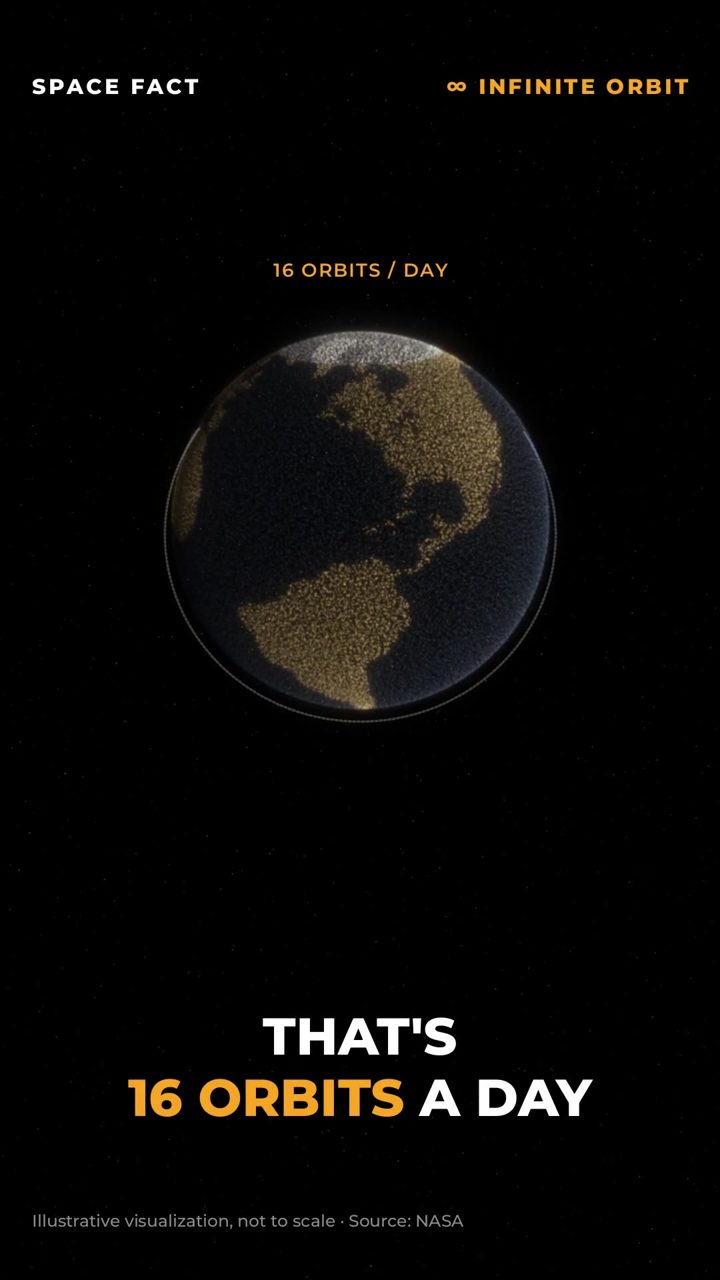
The video above is an illustrative 3D visualization and is not to scale.
Enjoyed this story?
Get new space stories and 3D space-fact Reels in your Facebook feed every day.