Pennsylvania's Grand Canyon, Seen From Space in Fall Colors
Landsat 8 caught Pine Creek Gorge, a 1,500-foot-deep canyon carved with help from the last ice age, as fall colors peaked on October 25, 2026.
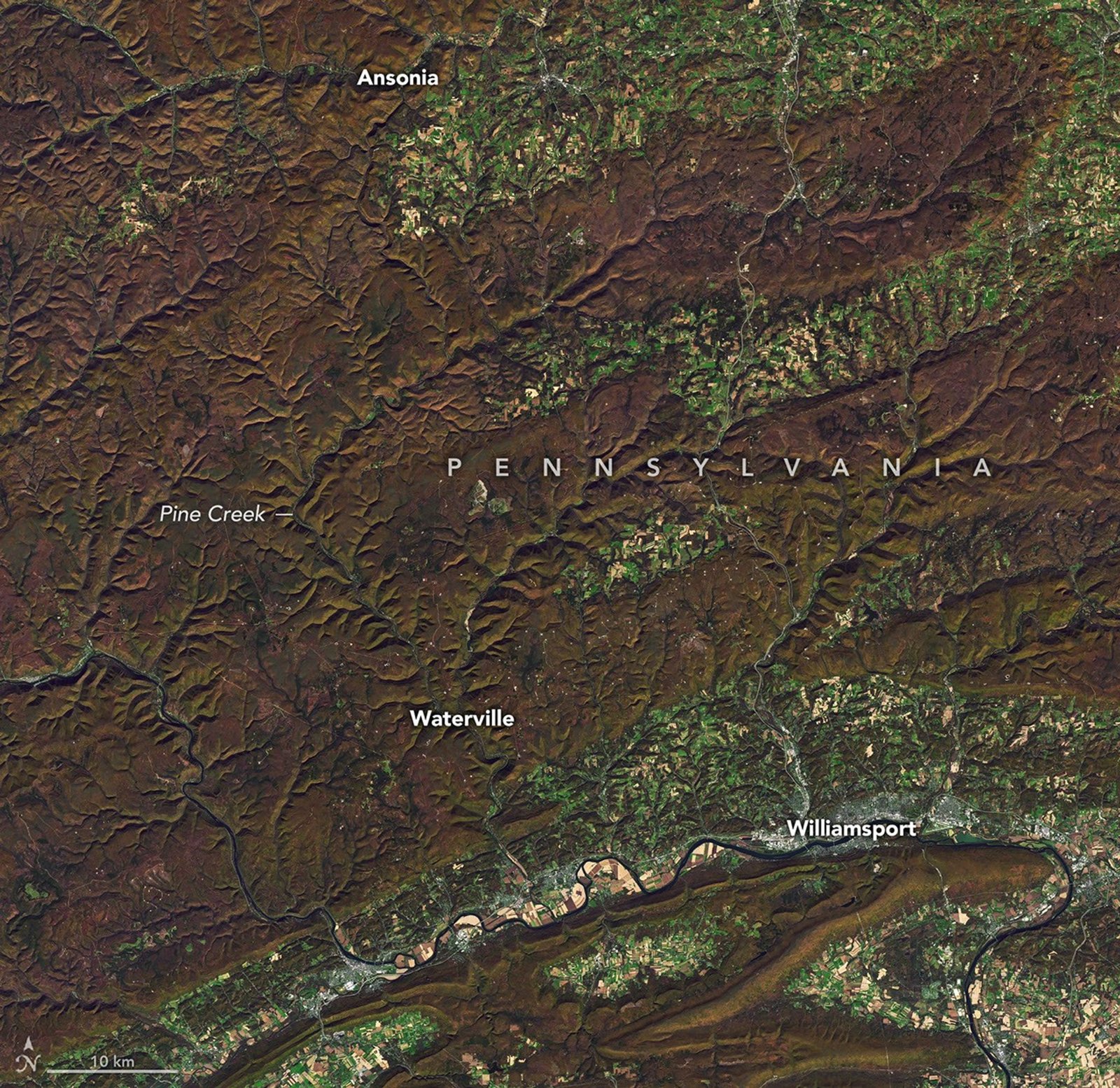
You don't have to go to Arizona to see a grand canyon. NASA's Landsat 8 satellite captured Pine Creek Gorge in north-central Pennsylvania on October 25, 2026, right as the fall colors were on full display. Locals call it the "Grand Canyon of Pennsylvania."
The gorge runs for about 45 miles (72 km), from Ansonia south to where Pine Creek meets the West Branch Susquehanna River, and it is deepest around Waterville, at roughly 1,500 feet (460 meters). Unlike the bare rock walls of desert canyons, its slopes are covered in forest, and in autumn the northern hardwoods and oaks turn red and gold, colors that echo the famous rock of the Arizona canyon.
Shaped by the last ice age
Glaciers helped make the canyon, but the ice did not carve it. Pine Creek once flowed north. When glaciers pushed in from the northeast during the last ice age, they dammed the river and filled the valley with lakes. Those lakes eventually spilled over and sent water south. Rocks and sand left behind by the melting ice kept the creek from turning back, and rushing meltwater deepened the valley into the shape it has today.
From "Pennsylvania Desert" to forest again
The view was not always this pretty. In the 1800s, loggers came for the huge white pines and hemlocks, some several feet across. Pines became ship masts, hemlock bark was used to tan leather, and logs were floated down Pine Creek in massive drives. By the early 1900s the hills were so bare that people called the area the "Pennsylvania Desert."
The forest has since grown back, along with black bears, coyotes, bobcats, timber rattlesnakes and many songbirds. In 1968, 30,000 acres (12,000 hectares) of the gorge were named a National Natural Landmark.
Enjoyed this story?
Get new space stories and 3D space-fact Reels in your Facebook feed every day.