NASA Asks Companies How to Keep Hubble Flying Longer
NASA is asking industry whether a commercial mission could boost Hubble to a higher orbit, service it, or safely bring it down before its expected re-entry around 2033-2034.
NASA wants to know whether private companies could help keep the Hubble Space Telescope working longer. On Oct. 29, the agency issued a Request for Information asking industry what it can offer for servicing Hubble in orbit.
Three options on the table
The request asks about three possibilities: a mission to boost Hubble to a higher altitude so it can keep doing science for longer, a servicing mission to improve its capabilities, or a safe, controlled re-entry into Earth's atmosphere (or other disposal) once its mission ends. Companies have until 3 p.m. EST on Monday, Nov. 30, to respond.
Why time matters
Like everything in low Earth orbit, Hubble is slowly losing altitude because of drag from the thin upper atmosphere, and it has no engine of its own to push itself back up. NASA's analysis says the telescope is likely to re-enter the atmosphere around 2033 to 2034, so any rescue or disposal mission would probably need to fly by 2032.
"Hubble still has important science ahead of it," said NASA Administrator Jared Isaacman, adding that if there are cost-effective ways to extend the life of a telescope already in orbit, the agency owes it to taxpayers and scientists to explore them. Nicky Fox, who leads NASA's Science Mission Directorate, pointed out that commercial companies have developed new ways to capture and service satellites in space in recent years.
More than 35 years of discoveries
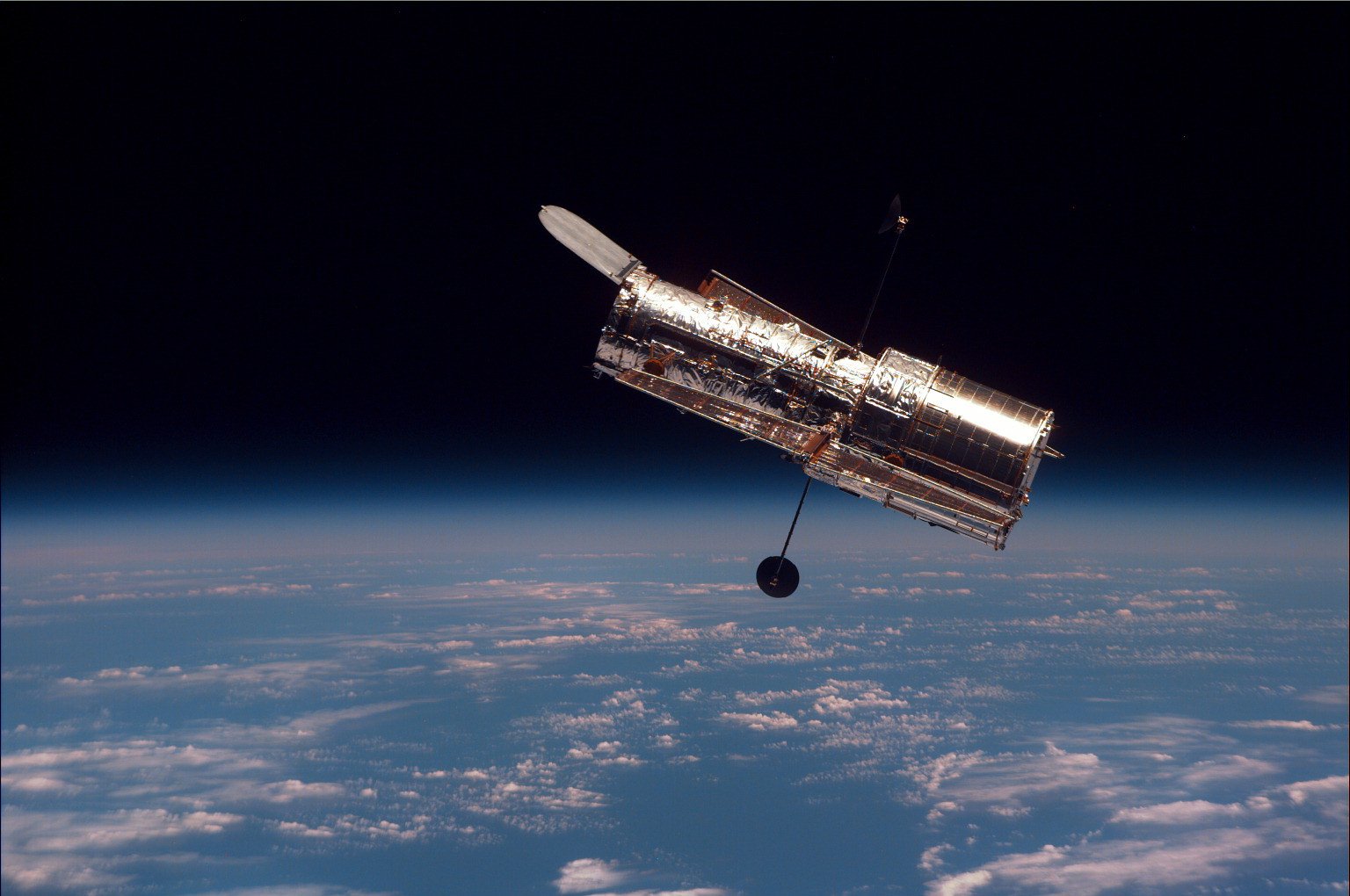
Hubble has been changing how we see the universe for over three decades. It is a joint project of NASA and ESA, operated from NASA's Goddard Space Flight Center in Maryland, with science operations run by the Space Telescope Science Institute in Baltimore. The photo above shows Hubble returning to orbit after its second servicing mission in February 1997.
Enjoyed this story?
Get new space stories and 3D space-fact Reels in your Facebook feed every day.