Perseverance Finds Ultrafine Mars Dust, a Clue for Protecting Astronauts
Dust clinging to spacesuit samples on NASA's Perseverance rover includes particles as small as 100 nanometres, small enough to reach the lungs.
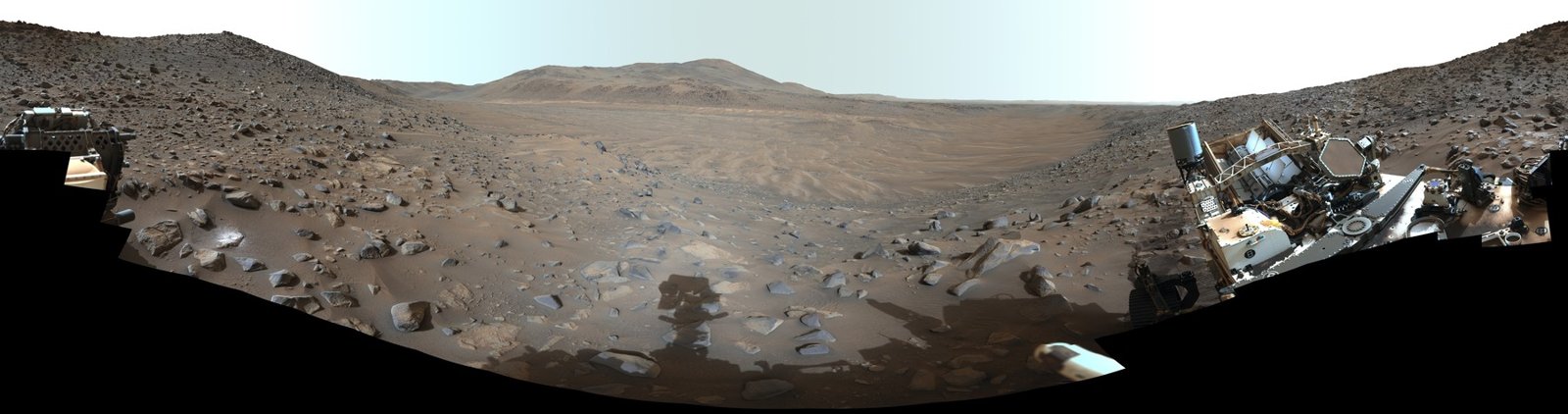
NASA's Perseverance rover has spent years carrying small samples of spacesuit material across Mars, and they have turned out to be excellent dust collectors. By studying the particles clinging to them over 1,645 Martian days, scientists have measured some of the finest dust ever detected on the Red Planet. The findings are published in the Proceedings of the National Academy of Sciences.
Smaller than ever measured
Earlier measurements on Mars resolved dust grains down to about 3 micrometres. Perseverance's PIXL X-ray instrument found two even smaller classes: fine particles under 2.5 micrometres, and ultrafine particles of around 100 nanometres, about 700 times thinner than a human hair. Particles this small can get deep into the lungs and even enter the bloodstream.
Static electricity decides what sticks
The samples sit on calibration targets for two of the rover's instruments, PIXL and SHERLOC, and include Teflon and Vectran, materials used in spacesuits. Dust grains pick up electric charge as they collide in the air, and different materials attract grains of different sizes. The finest particles stayed attached through years of driving and drilling, and organic polymers like Teflon, common in the outer layers of spacesuits, readily collected fine dust.
Why it matters for astronauts
Dust caused real problems on the Apollo Moon missions, scratching visors, wearing down suits and damaging seals. Martian dust is rounder and less abrasive than lunar dust, but it is rich in sulfur, chlorine and iron, and storms keep it circulating. The new data can help NASA choose suit and habitat materials, design airlocks and suitports, and set health standards before the first crews reach Mars.
Enjoyed this story?
Get new space stories and 3D space-fact Reels in your Facebook feed every day.