Webb's Cosmic Cliffs: Where Stars Are Being Born
One of Webb's first images shows the Cosmic Cliffs, the edge of a giant cavity in NGC 3324 in the Carina Nebula, about 7,600 light-years away.
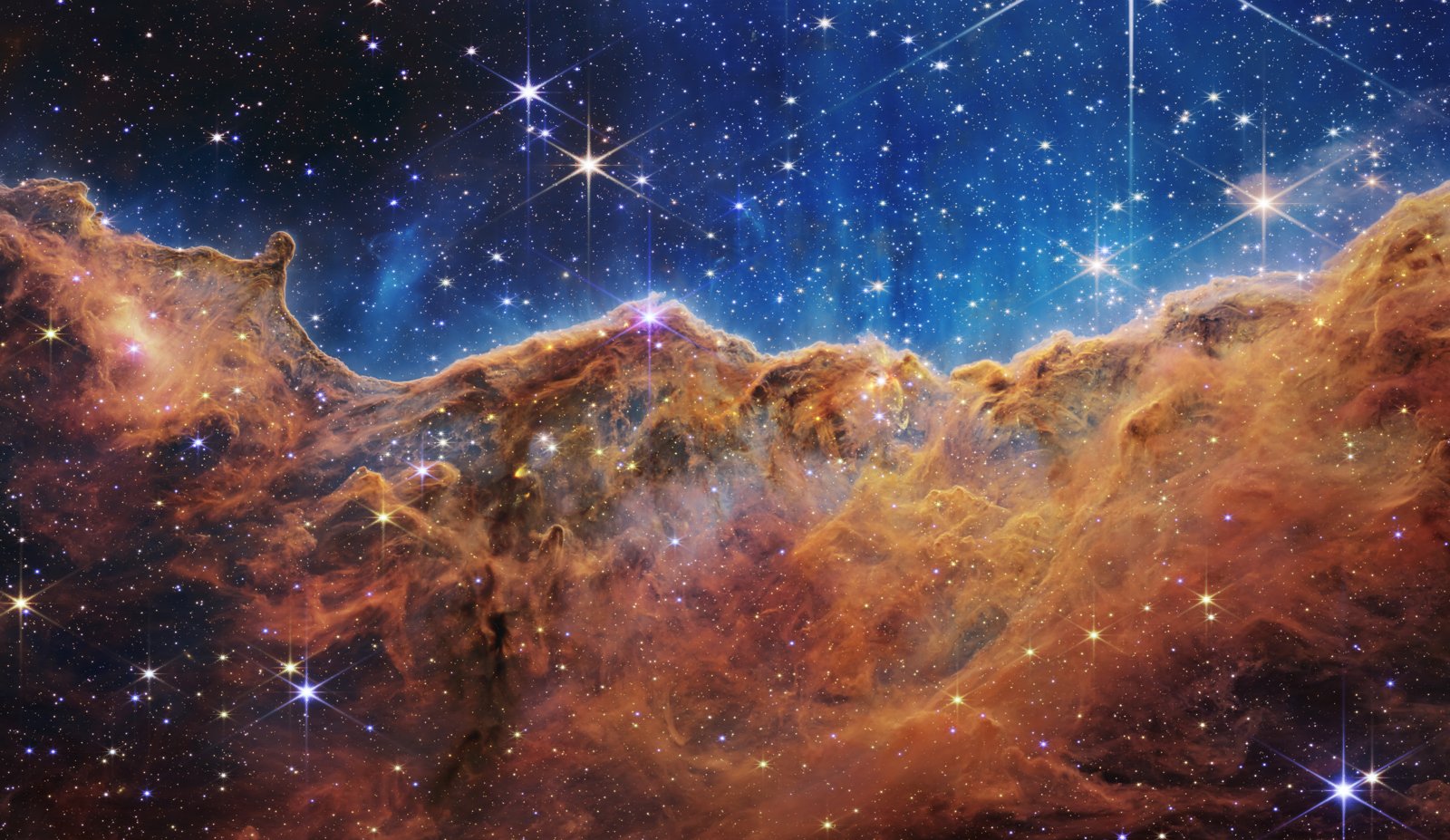
When the James Webb Space Telescope released its first full-colour images in July 2022, this one stopped a lot of people in their tracks.
Not mountains, but gas
The "Cosmic Cliffs" look like a mountain range on a starry night, but they are the edge of a gigantic, gaseous cavity within NGC 3324, a young star-forming region in the Carina Nebula, roughly 7,600 light-years away.
Carved by young stars
The cavity has been carved out by intense ultraviolet radiation and stellar winds from extremely massive, hot young stars located above the area shown here. Their light makes the edge of the cloud glow.
Hidden star birth
Webb sees in infrared, so it can look through dust that blocks visible light. That revealed previously obscured areas of star birth, including young stars that had never been seen before.
This post shows a vertical crop of the full Webb image.
Enjoyed this story?
Get new space stories and 3D space-fact Reels in your Facebook feed every day.