Scientists Date a 4.1-Billion-Year-Old Piece of Mars Found in the Sahara
A rose-colored rock found in the Sahara turns out to be a piece of Mars more than 4.1 billion years old, one of the oldest Martian meteorites ever found.
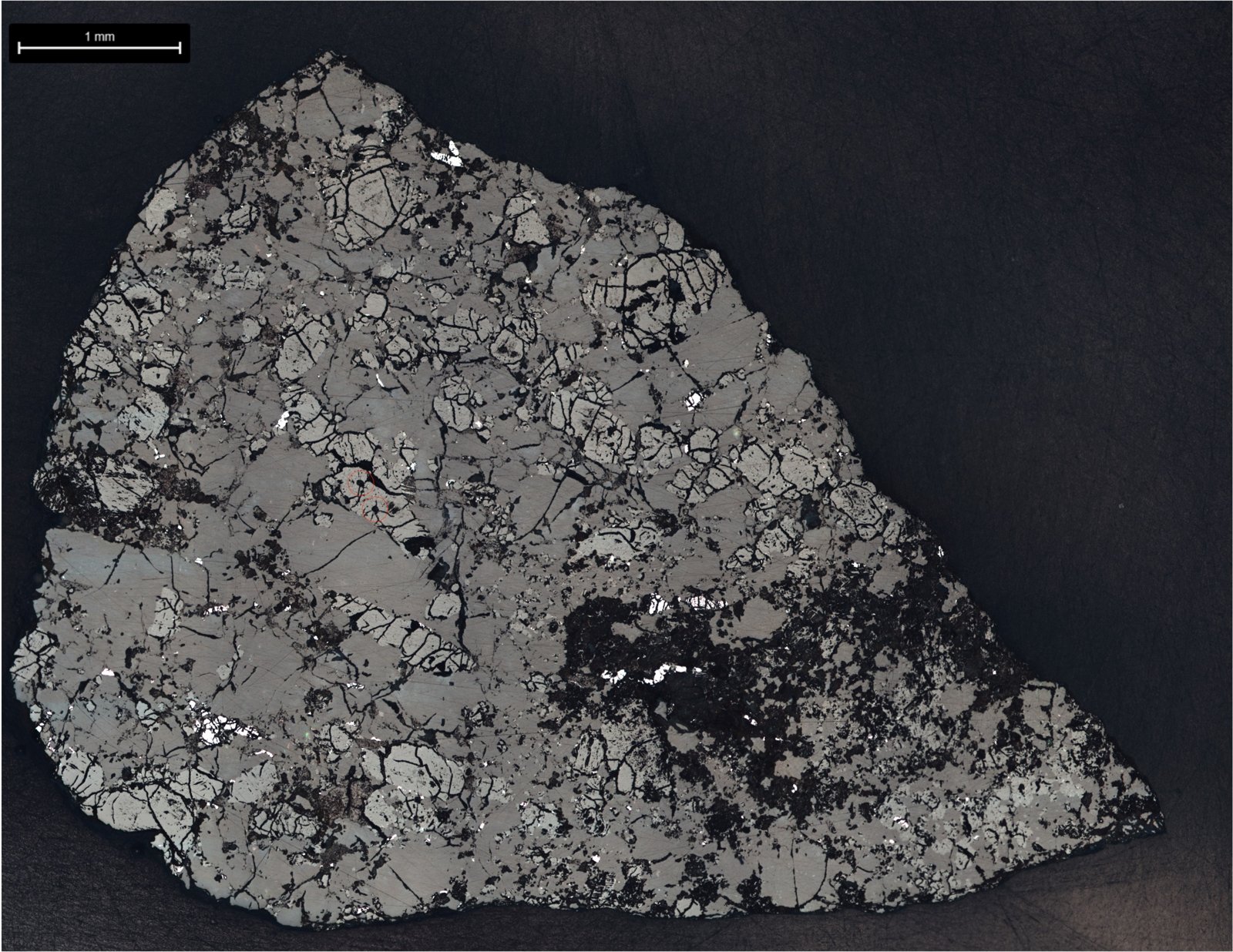
In 2022, someone picked up a rose-colored rock in the Sahara Desert. It weighed nearly 2 pounds (about 800 grams), and at first nobody knew how old it was or where it had come from. Now a team of NASA-funded scientists has worked it out: the rock is a piece of Mars that formed more than 4.1 billion years ago, which makes it one of the oldest Martian meteorites ever found on Earth.
The meteorite is called Teghaza 001, after the salt plain in Mali where it was discovered. It is one of roughly 435 known meteorites from the Red Planet. A first detailed description of it was published on October 29 in the journal Science, led by Yang Liu of NASA's Jet Propulsion Laboratory in Southern California. According to Liu, one of the paper's reviewers called the rock "a Rosetta Stone for Mars."
Why this rock is special
Only three Martian meteorites this ancient are known. One of them, ALH84001, is a similar age but is made almost entirely of a single mineral, while "Black Beauty" formed much later, about 2.1 billion years ago. Teghaza 001 is different: it holds a mix of volcanic minerals that records how the Martian crust formed from cooling magma and was later changed by water underground. Its mineral makeup matches what NASA's Mars Reconnaissance Orbiter has seen in the heavily cratered southern highlands of Mars, and the team identified 13 possible places on the planet where it could have come from.
The key clue came from tiny zircon crystals inside the rock, which geologists use to date samples precisely. Using a new dating method developed by Caltech's Francois Tissot, the team analyzed single mineral grains on a fragment smaller than a fingernail, without having to dissolve the sample. The results showed the rock was altered by Martian water around 4.1 billion years ago, so it must have formed even earlier.
A window into early Mars
Like every Martian meteorite, Teghaza 001 was blasted off Mars by an impact and eventually fell to Earth. Scientists say its minerals point to a much more active water cycle on early Mars, and possibly even an imprint of the Martian atmosphere as the planet was losing its water. The researchers say these papers are only the beginning, and they hope other scientists will now dig into what this rare rock can tell us.
Enjoyed this story?
Get new space stories and 3D space-fact Reels in your Facebook feed every day.