The Pillars of Creation Through Webb's Eyes
Webb's near-infrared portrait of the Pillars of Creation shows towers of gas and dust in the Eagle Nebula, 6,500 light-years away, packed with newly forming stars.
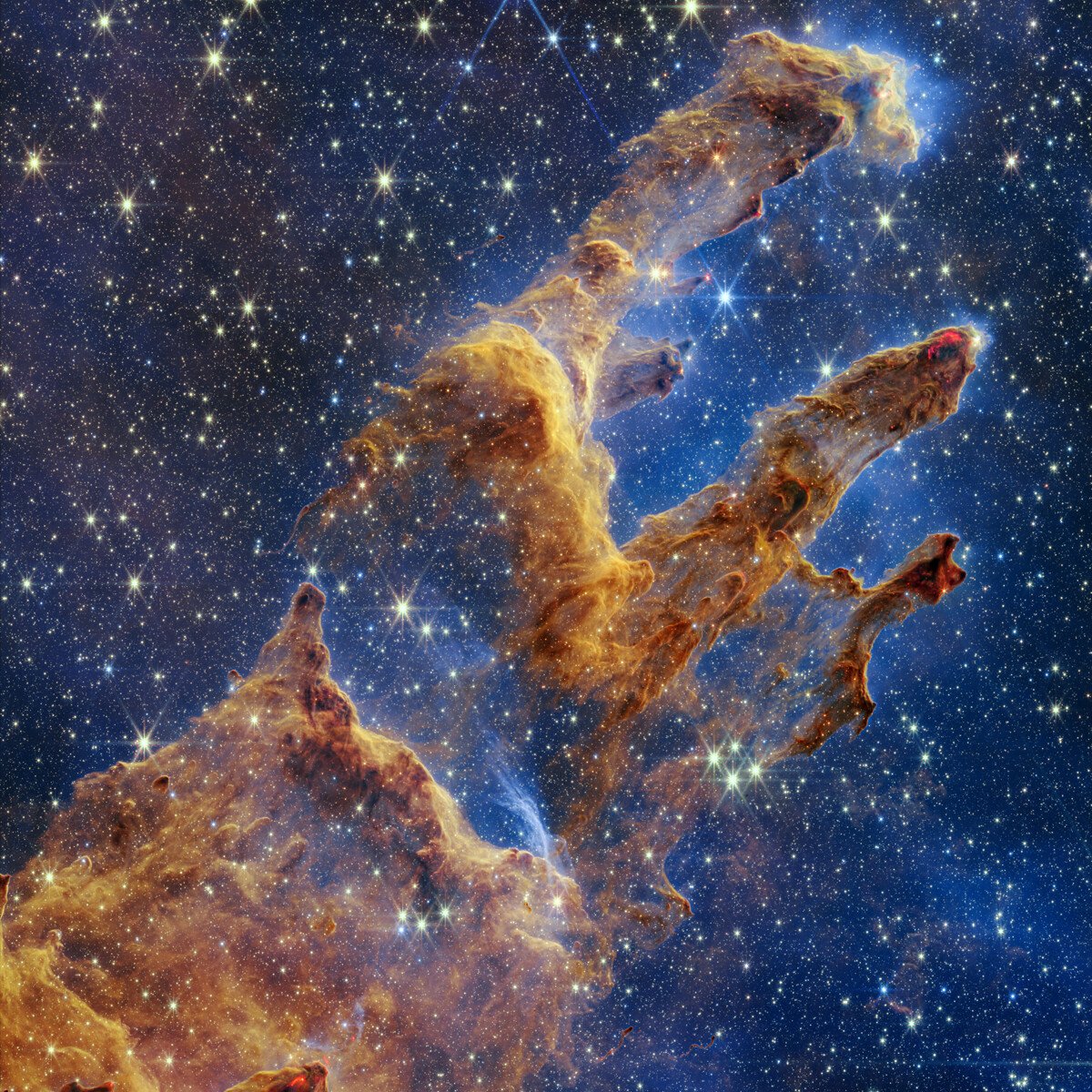
Few space images are as famous as the Pillars of Creation, and the James Webb Space Telescope gave them a whole new look.
Towers of gas and dust
The pillars are huge columns of cool gas and dust inside the Eagle Nebula, about 6,500 light-years away. In Webb's near-infrared view, released in October 2022, the semi-opaque layers glow in rusty reds and oranges, and thousands of stars that were hidden in visible-light images shine through.
Stars in the making
These clouds are where new stars form. Dense knots inside the pillars collapse under their own gravity, and some of the bright red spots near the edges are young stars still wrapped in their dusty cocoons. Webb's sharp view helps astronomers understand how stars form and break out of clouds like these over millions of years.
Hubble's classic, revisited
Hubble first made the pillars famous in 1995. Webb's infrared eyes see through much of the dust, turning a familiar scene into a crowded star nursery.
Enjoyed this story?
Get new space stories and 3D space-fact Reels in your Facebook feed every day.