Voyager 1 Went Quiet for 48 Hours, Then Called Home
NASA lost contact with Voyager 1 for two days in October before its signal returned on its own, weeks after a power-saving swap that keeps its instruments running longer.
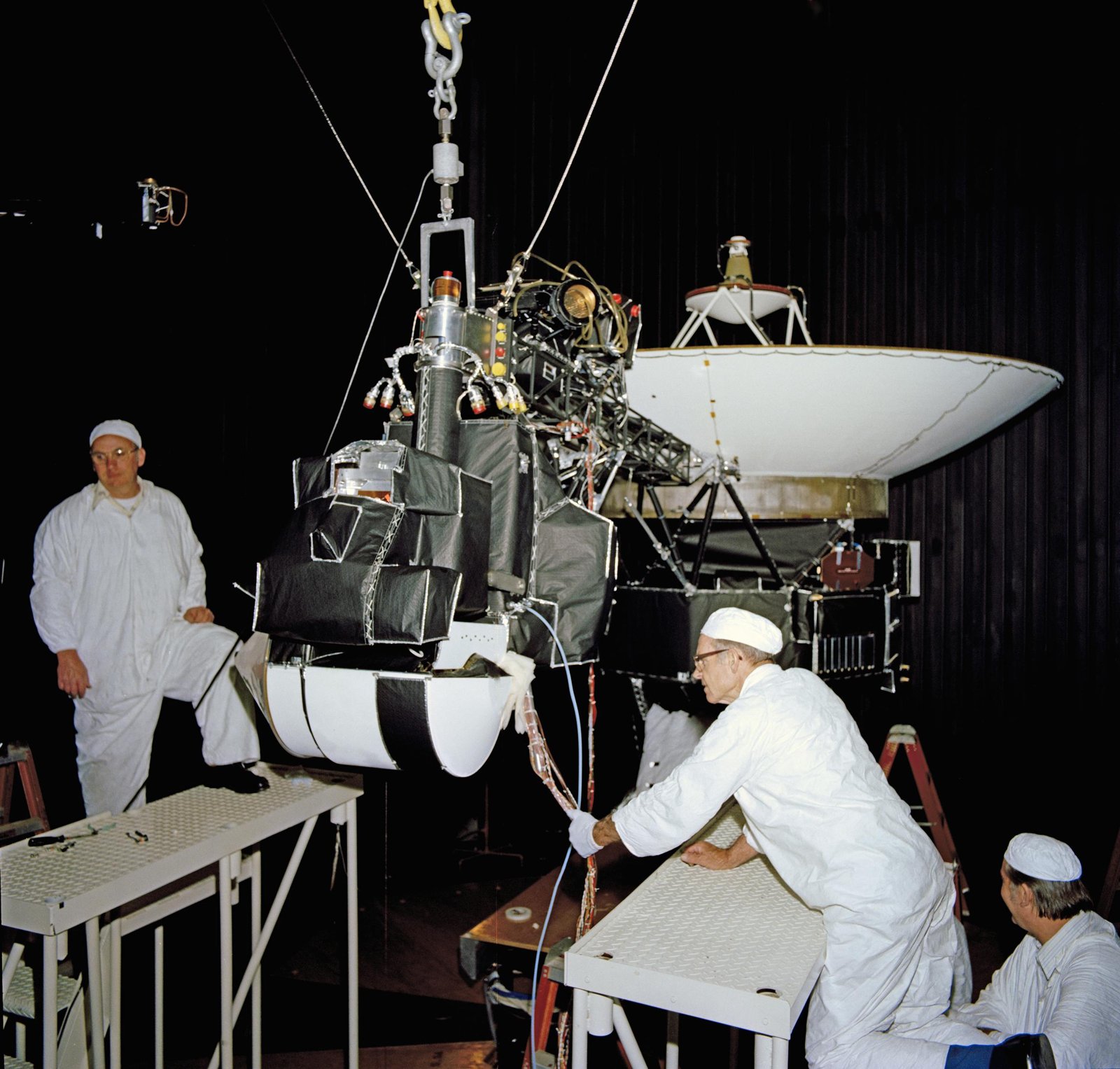
For two days in October, NASA lost touch with the most distant spacecraft humanity has ever built. During two scheduled contacts on October 18 and 19, the giant antennas of NASA's Deep Space Network could not pick up any radio signal from Voyager 1, which is about 16 billion miles (24 billion km) from Earth. Then, on October 20, the signal came back on its own, before the team had even sent commands to troubleshoot.
What happened out there
Engineers are still investigating. So far they know that one group of the spacecraft's thrusters went offline and the backups switched on. Voyager is programmed to make that swap automatically if its computers sense a problem, a safety routine called fault protection that puts the probe in a stable configuration and pauses normal work until engineers can take a look.
"This is the first time we've seen the spacecraft do something like this, but we are also at a point in the mission where we have to expect the unexpected," said Voyager mission manager Kareem Badaruddin of NASA's Jet Propulsion Laboratory. Contact has held steady since October 20.
The "Big Bang" power swap
The scare came just weeks after good news. In early September, the team switched off three devices on Voyager 1 and replaced them with three lower-power alternatives, all at the same time. The devices help keep the spacecraft warm in the deep cold of space, so swapping all three at once was the only way to save power while keeping heat spread properly. The team nicknamed the move the "Big Bang", and it had already done the same on Voyager 2 about six weeks earlier.
Both Voyagers run on the heat of decaying plutonium and lose about 4 watts of power every year. Without the swap, another science instrument on Voyager 1 would have had to be shut off as early as summer 2027.
One light-day from home
Voyager 1 is now speeding along at 38,000 mph (61,155 km/h). On November 18 it will be 16.09 billion miles (25.89 billion km) from Earth, one light-day away, which means a radio message will take a full day to reach it and another full day for the reply to come back.
Enjoyed this story?
Get new space stories and 3D space-fact Reels in your Facebook feed every day.